A Culture Without Forgiveness
What happens when a culture stops letting kids and teens change.
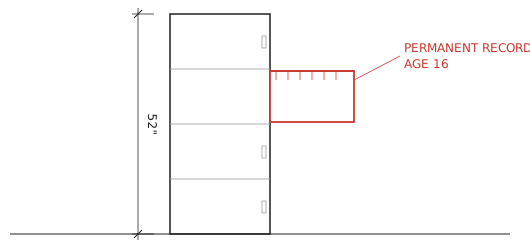
I don’t know about you, but I was never more sure of my beliefs and acts than when I was in my teens.
Those beliefs—from political philosophy to religion to how I treat others day to day—have nearly all changed with time’s passing. The acts? I committed crimes—nearly all petty, some less so—that would never cross my mind today.
Once, that was considered normal—expected, even. Youth is wasted on the young, and all that.
But now? Cultural and political forces are eroding the baseline tolerance and, dare I say it, forgiveness that we used to accord kids and teens.
You can see it in Harvard revoking an admission because of a years-old racial comment; in the willingness of the online mob (mostly adults) to dox a teen with the wrong opinion; or in our criminal and social systems as they increasingly mete out harsh, adult-level punishments.
There are too many causes for finger pointing.
But if we really are replacing a culture where people can evolve and change with one that defines individuals—early and nearly forever—by imprudent acts and words?
Well, that’s not just a political problem or a talker piece on Drudge. It’s the opening chapter of a book that starts by looking like China’s social-merit system and ends looking at lot like 1984.
(H/T Brian Hayashi for pointing me to the story.)
Greg W. Brooks. First published on Facebook, June 20, 2019.