AI and the Liability Math
AI adoption will be driven by liability math, not payroll. What happens when the machine is merely as wrong as the humans?
One more thought on GPT-3/4 before I shaddup: For businesses with exposure to very expensive mistakes, AI’s adoption is probably driven by managing future-liability risks more than current-liability payroll reductions or even harm reductions.
Put in context, think about two variables: Medical-error deaths cost a hospital X per year and a staff of experienced diagnosticians costs Y.
If AI systems dramatically lower X, that supports one type of adoption—you can imagine insurance companies offering lower rates to hospitals that augment with AI, physician malpractice insurance being harder to get if the practice doesn’t have an AI diagnostic assistant, etc. The diagnosticians probably all keep their jobs because the AI complements their work and the resulting effort has lower risk/cost for employers and insurers.
But what if the AI system delivers diagnoses consistently as error-prone as those from human practitioners? You’d still see adoption, but it seems to me we’d be much more likely to see laid-off diagnosticians. From the hospital’s view, if you can’t meaningfully move the needle on X, lowering Y is the logical alternative. As with the example above, none of this works until there’s a body of court cases and legislation around AI liability.
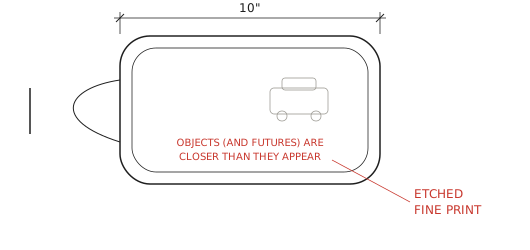
None of it’s here yet, of course. But, like the small type on my car mirror likes to remind me, objects (and futures) are closer than they appear.
Greg W. Brooks. First published on Facebook, March 14, 2023.