Identity Without Proximity
For most of history, identity came from proximity. Now it comes from “Do these people think like me?”
If your idea doesn’t feel like it came from inside the tribe, it gets treated like an attack. That’s not new on either my (gasp!) nearly 40-year career timeline or in the arc of human history. But I do think something deeper is happening right now.
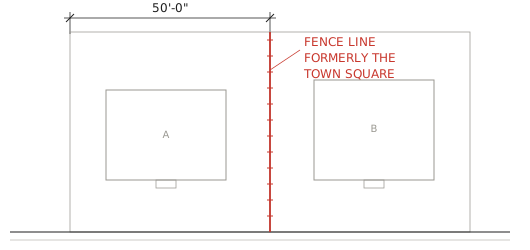
For most of history, identity was largely about proximity: your family, your town, your church, your trade were all primary inputs. You trusted what you could touch and you mirrored what you trusted. The people you saw every day were the ones who shaped your sense of what was true, what mattered, and what was real. Yes, nationalism, blah, blah. But what the commissar was up to probably mattered less than what you heard over the fence.
Fast forward: We’ve got near-infinite access to information, but very little context. Near-infinite access to “relationships,” but not the kind that help you move a fridge or raise your kids. The town square became the comment thread or the subreddit, offering a dopamine hit where once there was a messier but more enduring sense of community.
Information, relationships, experience — the big three in forming identity – are all up for grabs, and none of it requires proximity anymore.
You can build your whole worldview without talking to a single person who lives on your street. So we fall back on the only filter that still feels like it works — even if it doesn’t: “Do these people think like me?”
If they don’t, many of us don’t trust them. Even if they’re right. On its own, maybe survivable. But we also built a trillion-dollar engine to monetize that reflex. And it works.
What we’re left with is identity built from grievance, not shared experience. And worse, very little incentive to climb out of it. You can make pennies (if you’re lucky) rebuilding slow, boring trust; the real money’s in stoking the fire.
I don’t have an answer. But I do think about what it would mean to help people rebuild identity the old-fashioned way: in real places, with shared effort, shared memory, and slower stories.
No idea what that looks like at scale. But it feels like the only path out.
Greg W. Brooks. First published on Facebook, Aug. 17, 2025.