Pitching Is a Bid/Ask Transaction
Pitching is a bid/ask transaction, and both sides need more efficiency in the human-loop part. The market is about to get faster.
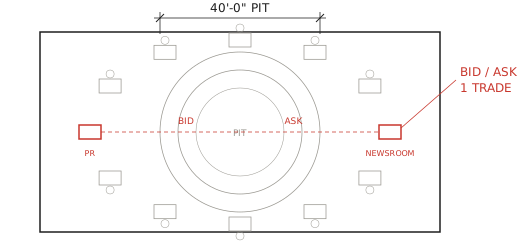
I dislike talking about PR—odd, given that I’ve spent more than 35 years doing it. But it’s not rocket science, and there’s a lot of snake oil, so the conversations sometimes bug me.
But I do like talking about markets and AI. And we’re beginning to see an intersect between those and PR.
Premise: Pitching stories is basically a bid/ask transaction. Flacks have stories to tell or sell and need a buyer. Journalists have limited time and attention, as well as imperfect information about their beats. Pitches, at their best, expand what they know and what they know to ask.
Like any bid/ask transaction, imperfect information creates friction—even experienced people aren’t especially consistent at sorting for fit, timing, risk, audience, and likely value. And today, journalism is a low-margin business with every incentive to drive down costs. PR has better per-employee margins, but those are eroding too.
Both sides need more efficiency in the human-loop part of the process.
So maybe the future looks like finely tuned reporter and editor AIs taking pitches from equally tuned PR AIs at high speed, getting to yes or no faster and with better institutional memory than people could manage.
The journalist AI has no ego, but knows what engages readers, converts subscribers, builds trust, and fits the outlet’s broader editorial priorities. The PR AI knows what can and cannot change, what access and assets are available, where the redlines are, and what outcome the client actually wants. It may also know whether a story is likely to reach 200,000 random people or 2,000 people who matter.
I’m bullish on AI, so I like this vision. But once pitching and content creation become nearly free, the supply of pitches (and maybe content, although that’s less clear) becomes nearly infinite. The scarce thing won’t be information. It will be trusted information.
Who honors embargoes? Who overpromises? Who can produce the underlying data? Who has offered three outlets the same “exclusive”? The valuable currency may not be the story itself so much as a verified opportunity to report one. That’s a real opportunity for PR, the same way a great reputation for consistently delivering the number and demographic of eyeballs for a given story would be an opportunity for the media.
Since the underlying process is still bid/ask, marketplaces could spring up.
Maybe 10 years from now (maybe five!), a potential exclusive gets handed to an AI assistant and quietly shopped among authorized newsroom agents. The bids are timing, expected reach, audience quality, prominence, and (assuming humans are still in the loop) the reporting resources they are prepared to commit.
Like I said, PR isn’t rocket science, especially down in the trenches. But if we’re going to have conversations about its future, the possibilities are a lot more interesting than the hand wringing.
Greg W. Brooks. First published on LinkedIn, Aug. 2, 2026.