PR Is Easy
If a normal person can’t understand your strategy in a couple of sentences, it isn’t one.
(PR shop talk... Ignore if that’s not your thing, although this has a lot of relevancy for my policy friends as well.)
I was asked about the role of strategy in PR, and the question included, “I’d like to break the stereotype that PR is easy.”
Spoiler: PR is easy. The best strategies? Similarly easy.
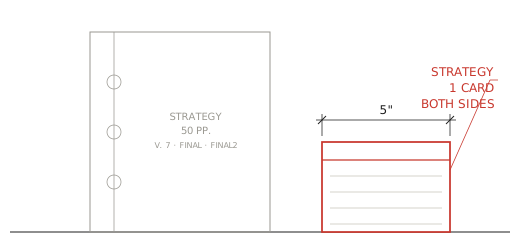
That doesn’t mean any idiot can do it. It does mean that a good test of your PR strategy is: Can a normal person, outside of PR, understand what you want to do and how you’ll do it in a couple of sentences?
Bad strategy: Some 10/20/50 page document that’s brittle and outdated the moment the ink’s dry.
Good strategy: People have problems with <<problem>>. That makes them feel <<emotion1, emotion2 and maybe emotion3>>. We tap into that via <<high-level methods>>, move them from <<emotion1 to newemotion1, etc.> and reinforce it via <<another small handful of high-level methods>>.
Bad strategy: A messaging matrix that requires hundreds of spreadsheet rows.
Good strategy: We’ll deliver the right message through the right channel to the right person—every time. And in each message, we will do at least two out of three things: Give them something to know. Give them something to do. Give them something to feel.
It’s an industry with often-vague deliverables, and many people overplan and overcomplicate. Execution-level planning matters, especially when you’re paying hundreds of dollars an hour.
But good strategy should be directional, opinionated and straightforward enough for a high schooler to grasp.
Greg W. Brooks. First published on Facebook, Nov. 11, 2024.